Charles Williams
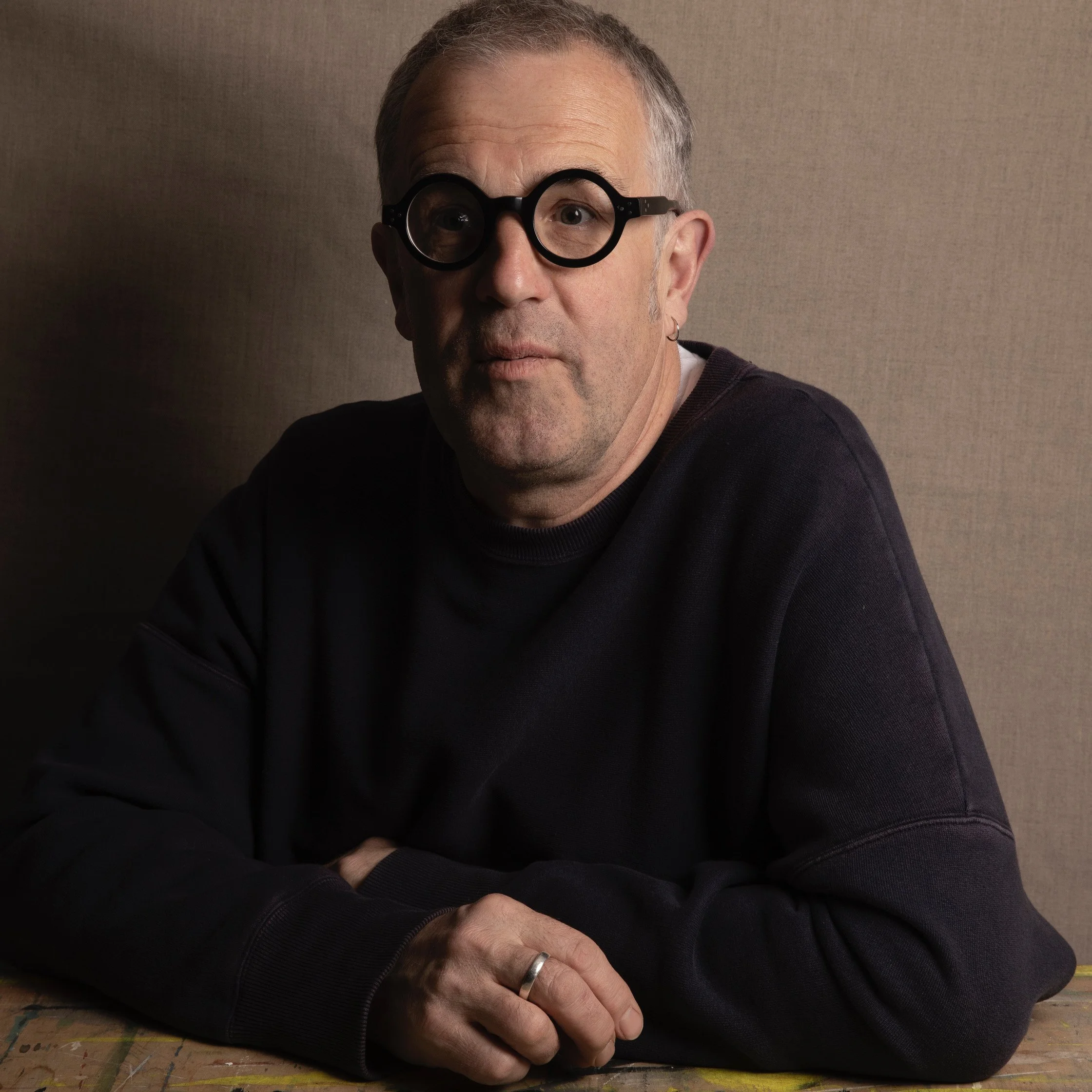
Born in Evanston, Illinois, Williams is a British artist. A former student at the Royal Academy Schools, and a founder member of the notorious Stuckist art movement, his work has been exhibited in the UK, Europe, and the United States. While most of his career has been directly involved in the art world, painting and exhibiting in London, the UK and the wider world, he has also had a parallel, if shorter, career in teaching visual art in Higher Education.
Formerly Programme Director of Fine Art at Canterbury Christ Church University, he was a PhD scholar there between 2018 and 2021, completing an auto-ethnographic investigation into his painting in 2023. In 2023 he was elected President of the Royal Watercolour Society. He is currently Programme Director of UAL Level 4 Foundation Diplomas in Art and Design, and Creative Enterprise at EKC Canterbury, and is a mentor on the Turps Margate scheme.
Exhibitions include RA Summer Exhibition, Hunting Prize, Lynn Painter Stainers, Threadneedle Prize, The Marmite Prize, and the John Moore’s. Galleries include Lily Zeligmann Gallery in the Netherlands, John Martin of London, Charlie Dutton Gallery, and solo shows at, among others, the Bakersfield Museum of Modern Art, Cal., USA. He is currently represented by New Arts Projects in London. He published ‘Basic Drawing: How To Draw What You See’ in September 2011 and the follow-up, ‘Basic Watercolour’ in July 2014 (Robert Hale, London). He has written a series of articles for Turps magazine on Carracci, GD Tiepolo, Joseph Highmore and humour in painting. His interests are in the figurative, narrative tradition, although the work is informed by a fascination with formal elements of 2D and 3D design.
Artist statement
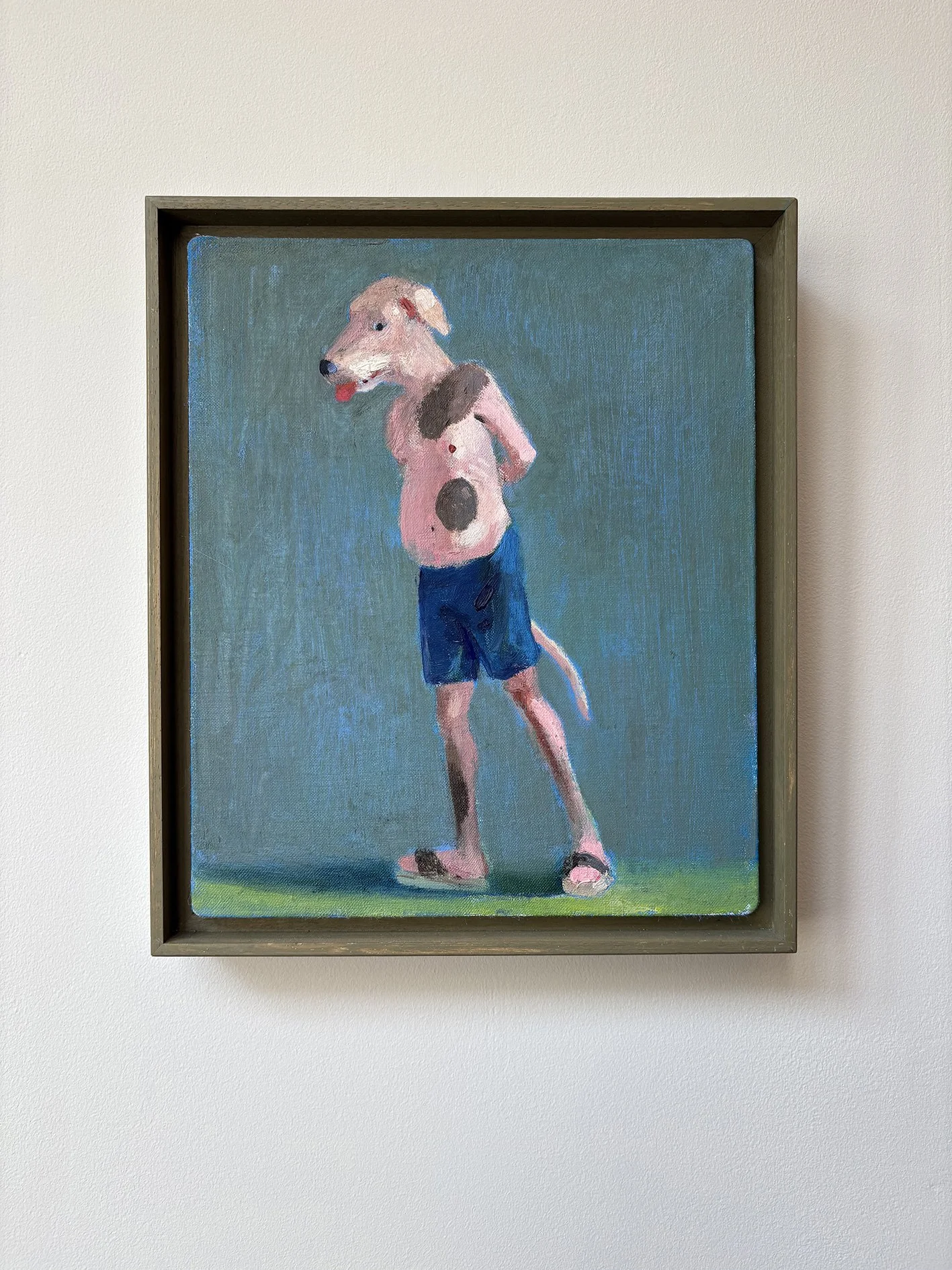
“In my work, the possibility of presence in the two-dimensional arena of painting wrestles with scale and material. Narrative, surface, and image are knitted together in an unfolding improvisation that courts embarrassment. Recent work has taken me into the field of theriathropy, as I try to escape the pitfalls of social representation in depiction. Dog-headed people, centaurs, bears and horses that purposefully occupy human territory, more stuffed toy than dirty-clawed nature, populate the world I make.”
-
![]()
Morning Walk
Oil on linen
25 x 30cm
£1500