Sim Taylor
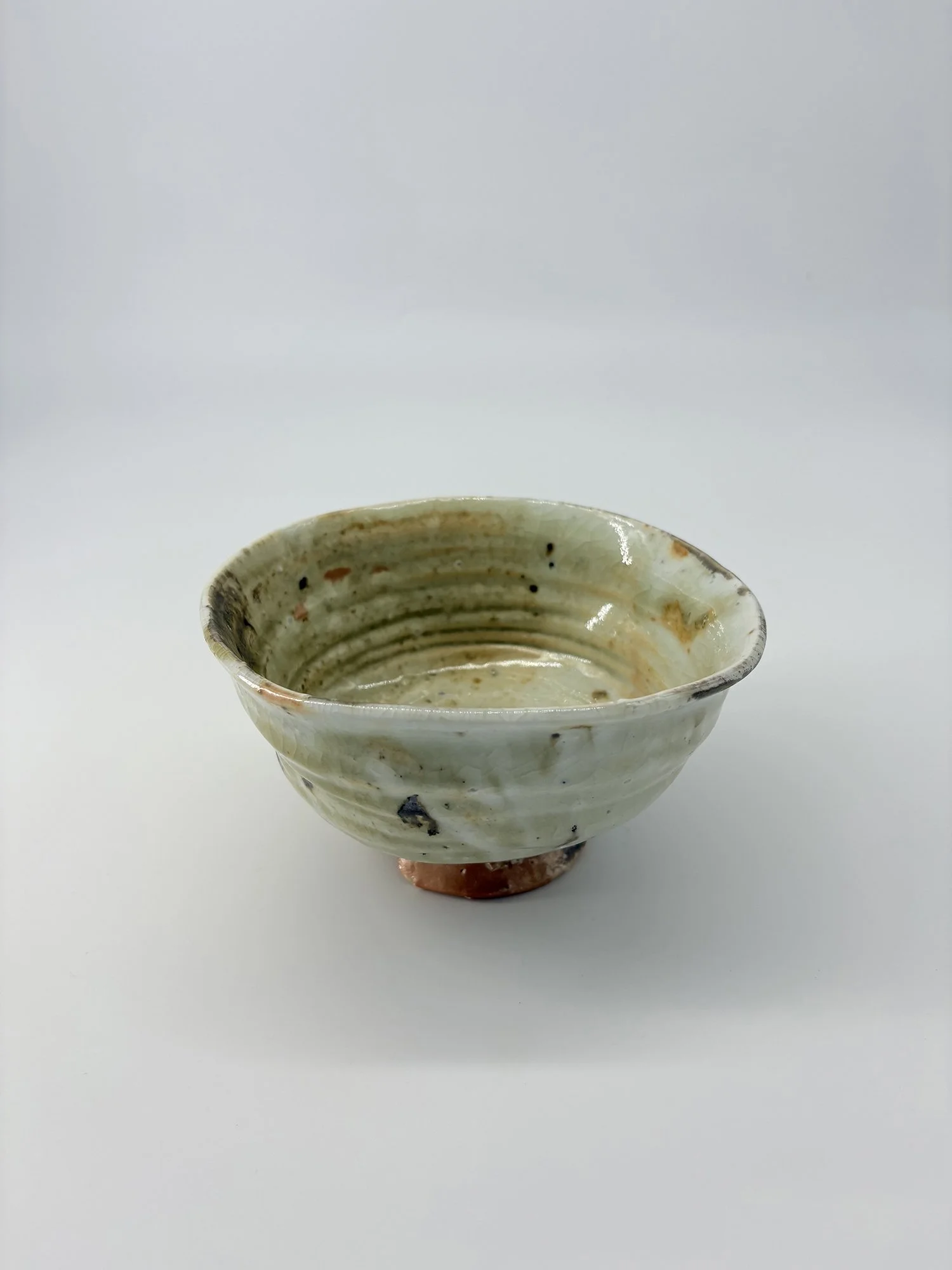
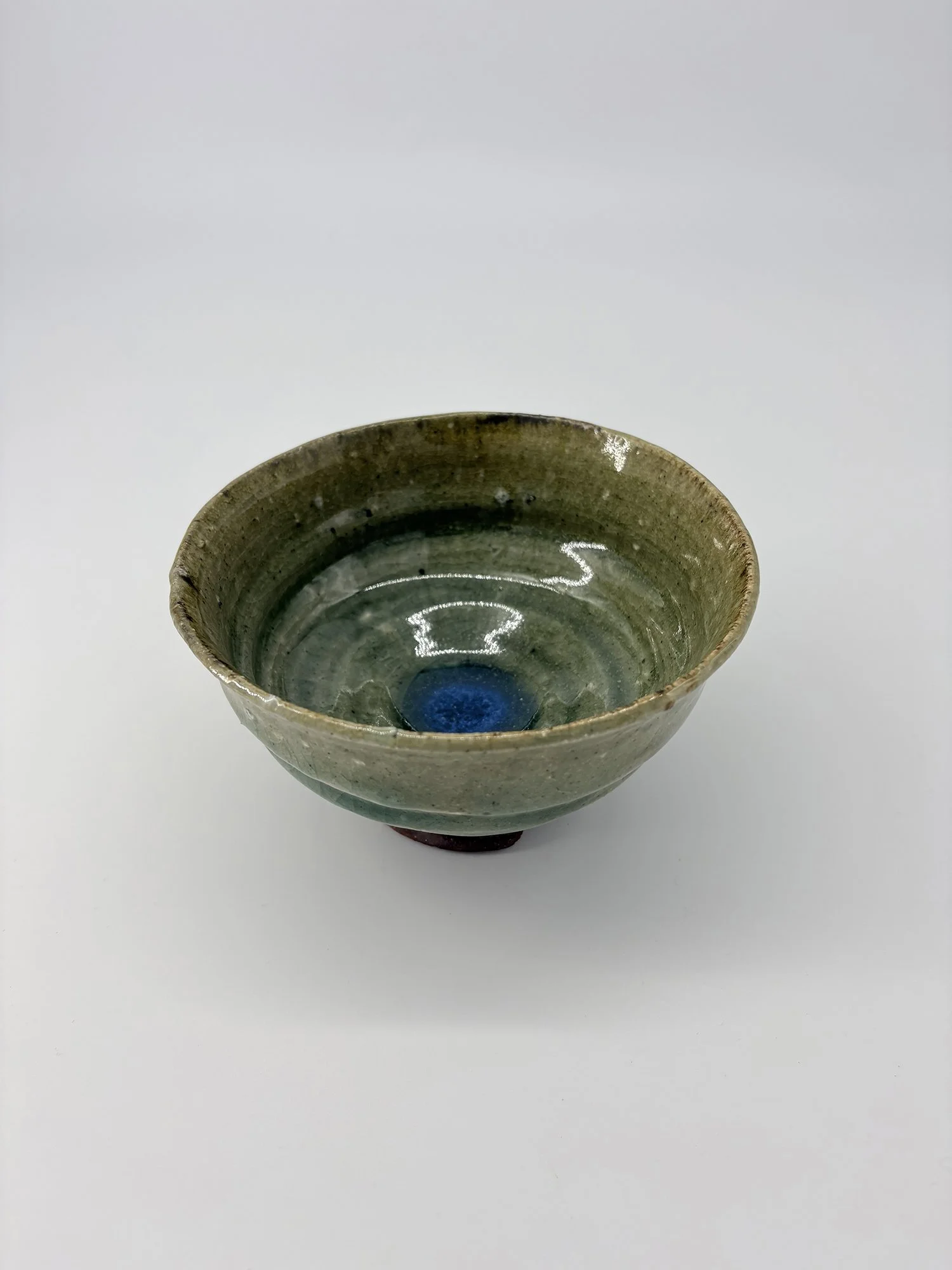
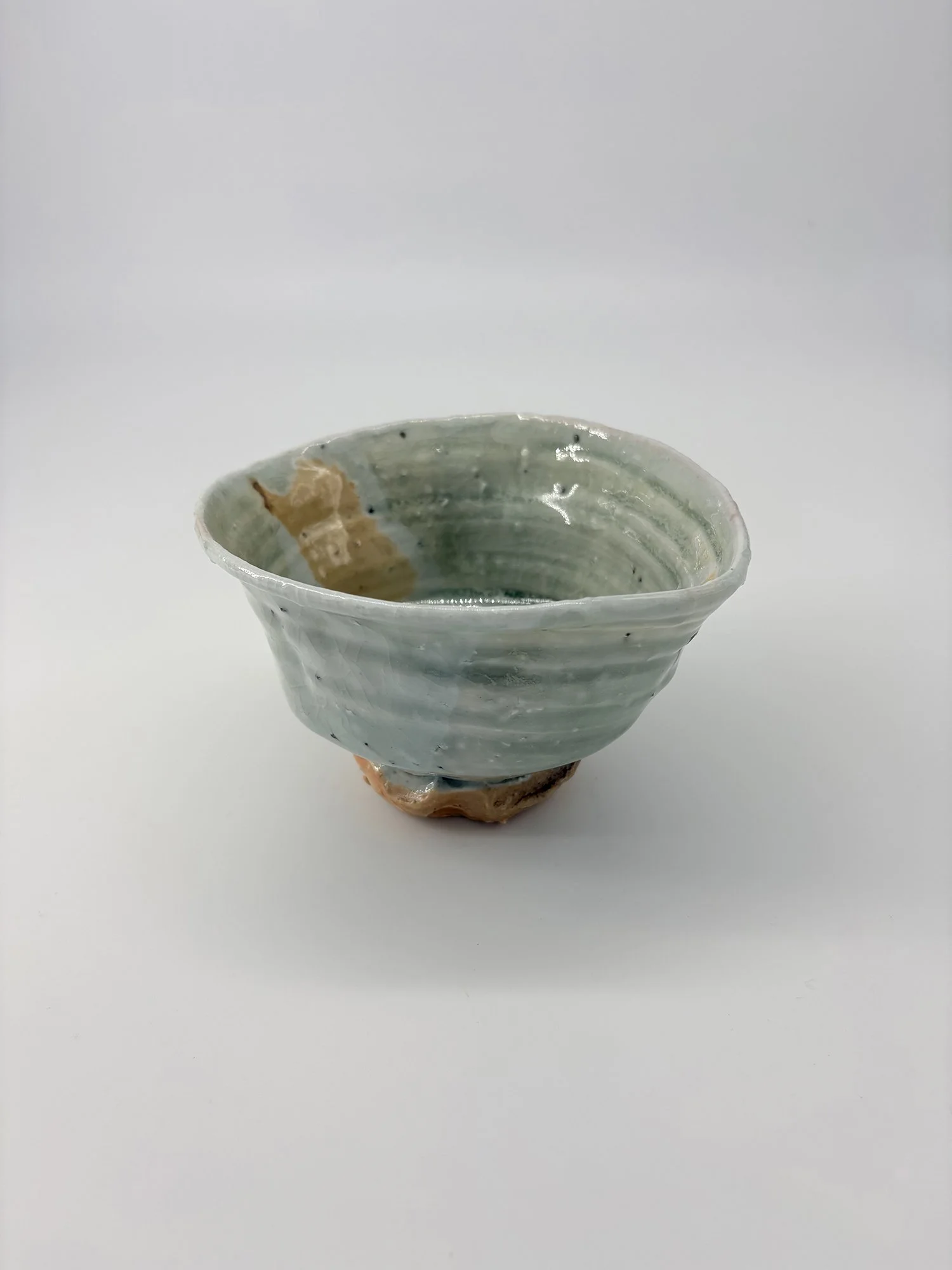
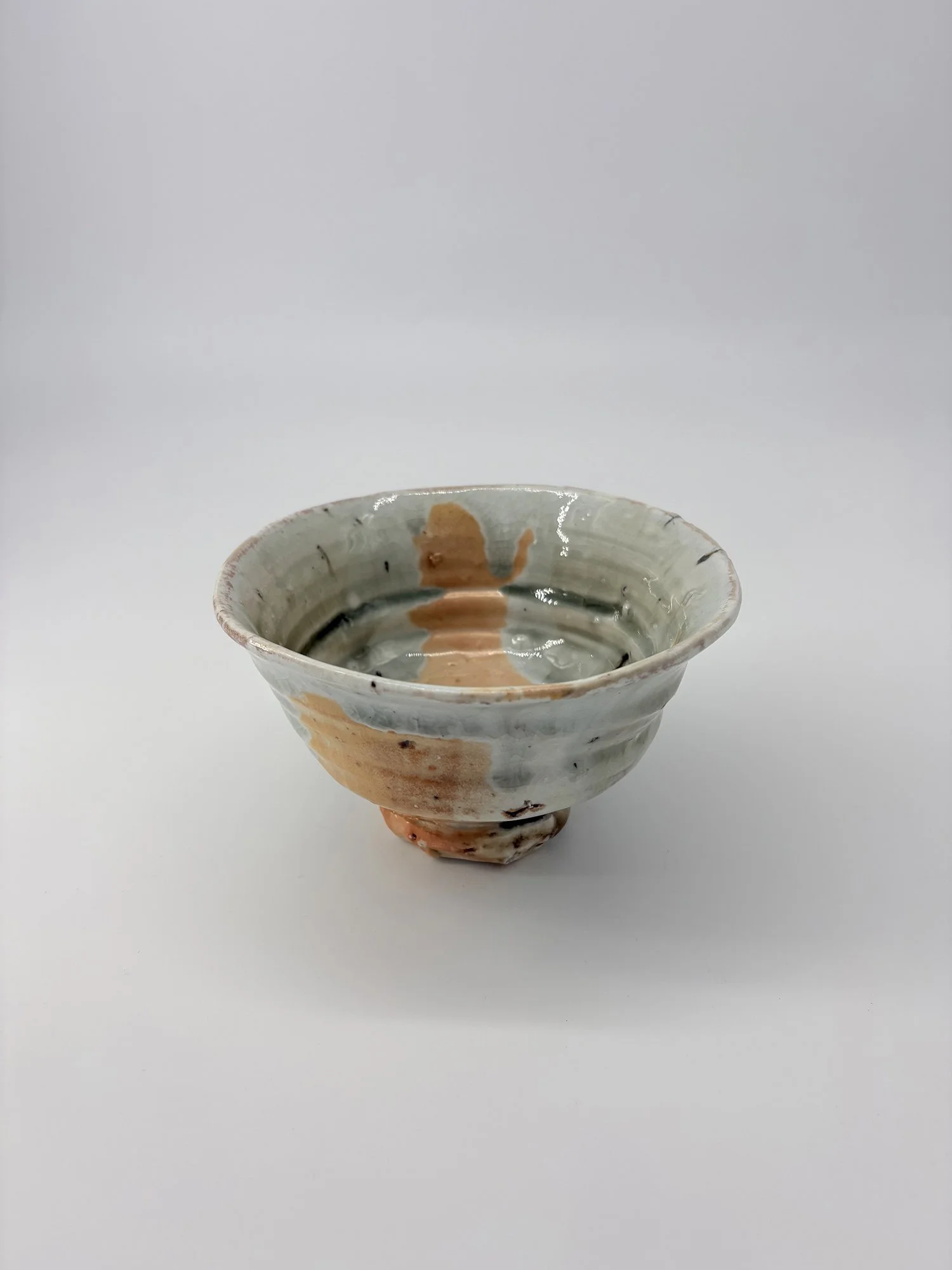
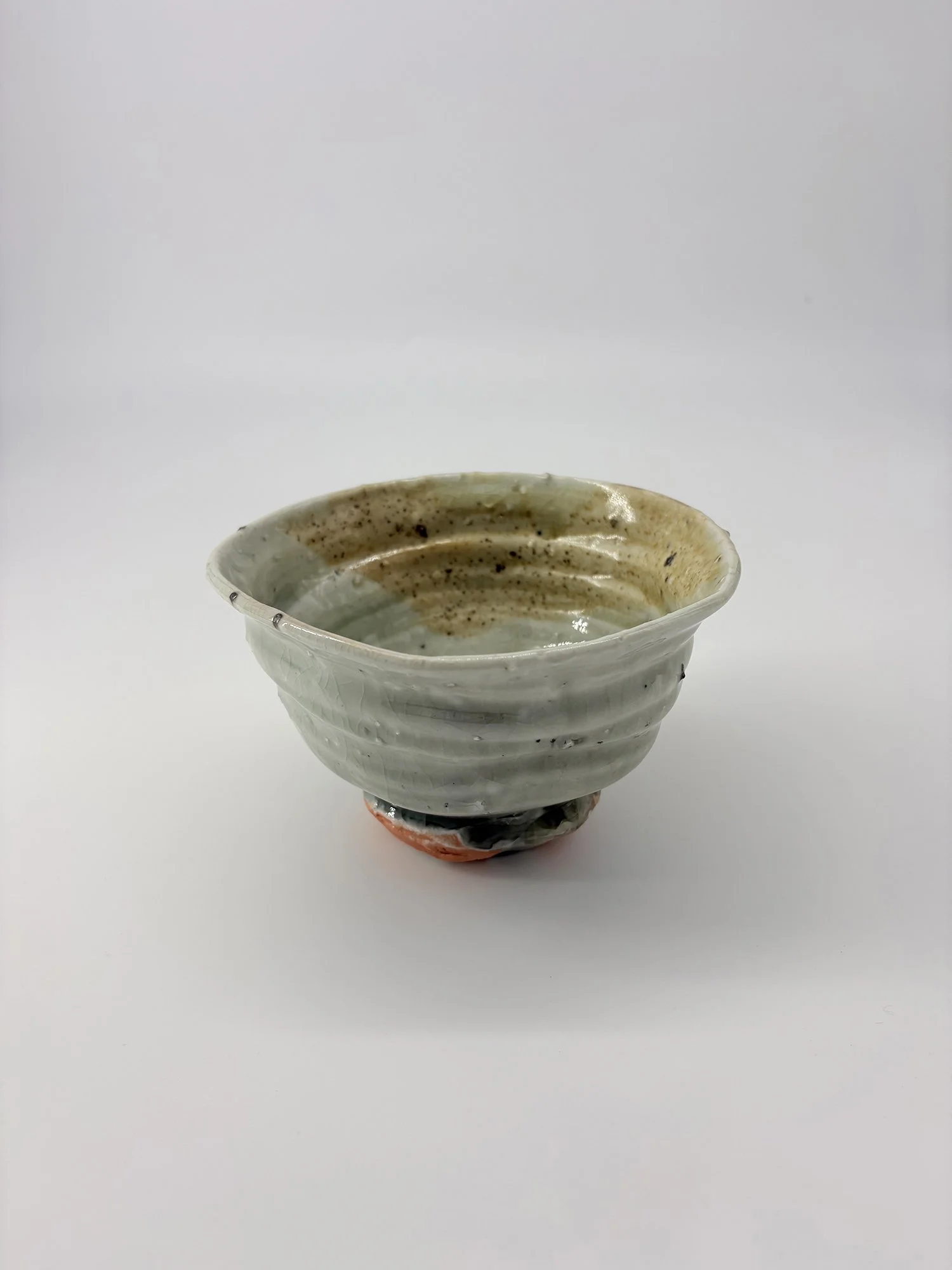
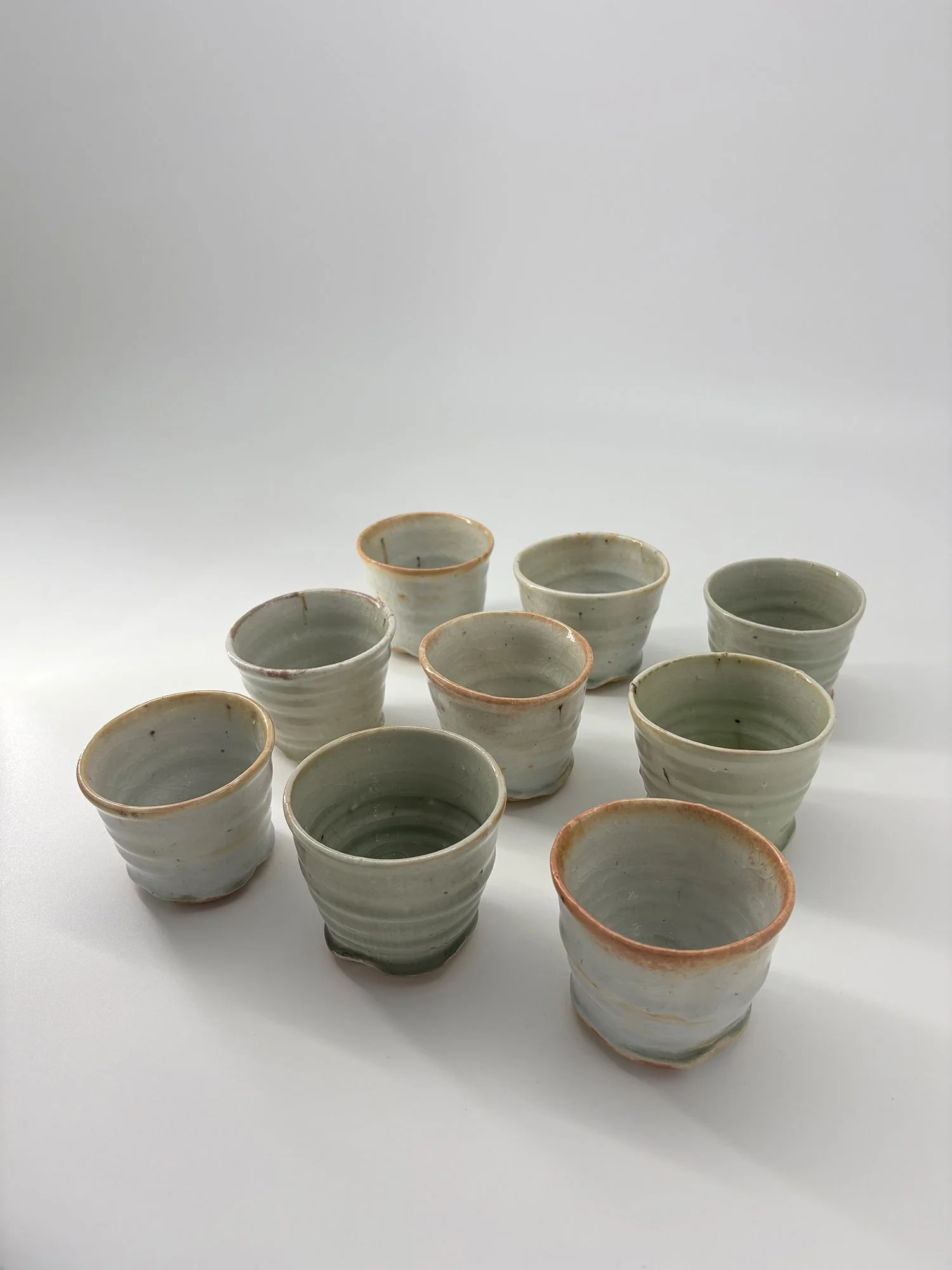
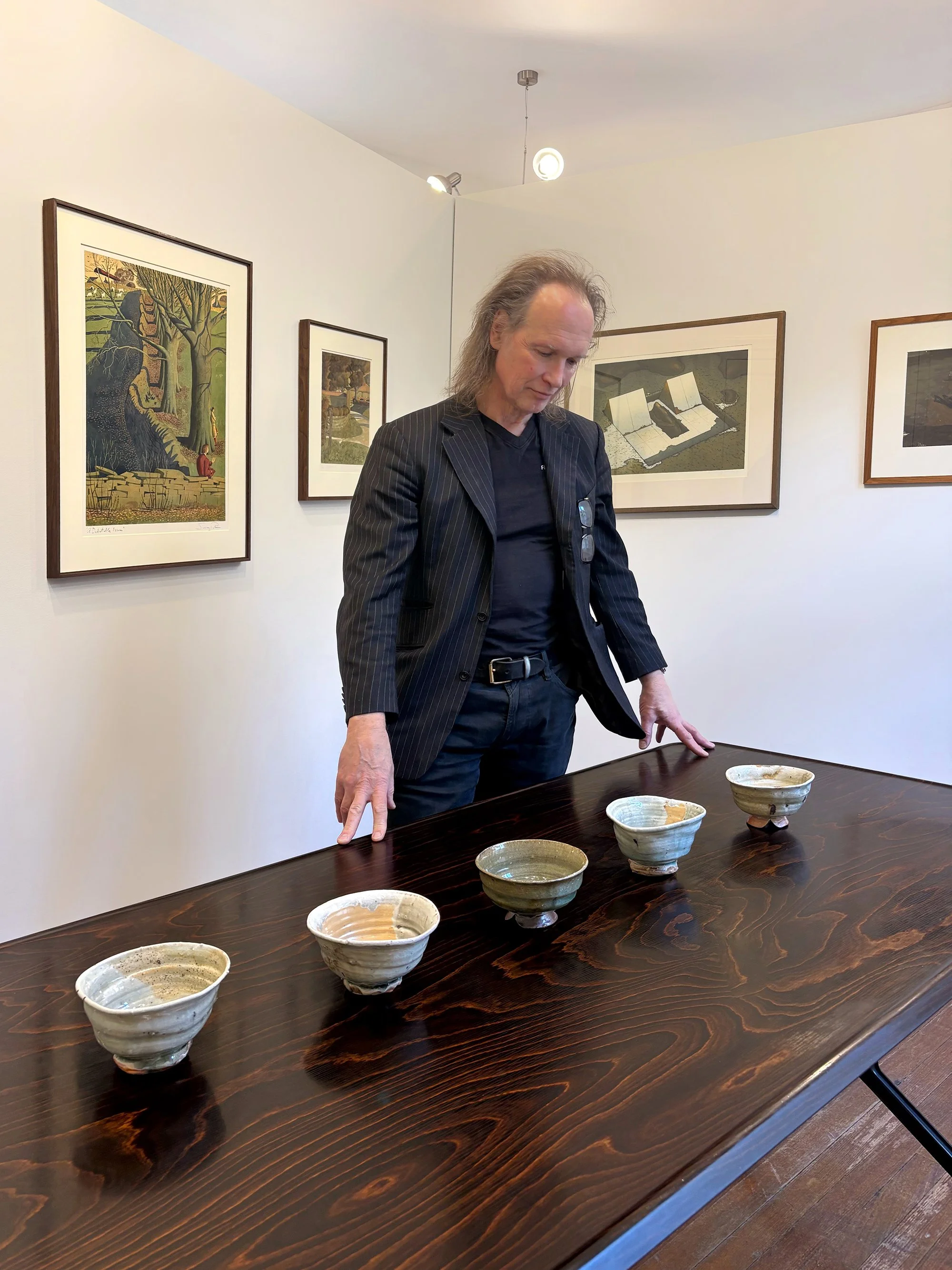
Sim Taylor is a potter based in the South West. He has been working with clay for 30 years and is fascinated with wood fired ceramics. His work is fired in a small stepped anagama kiln which he built himself and rebuilt several times constantly searching for the perfect environment for gaining interesting firing results. He uses shino and celadon glazes, mixes indigenous river bed and quarry dust into his clay bodies to produce works that are thrown, carved and hand manipulated before offering them up to the kiln.
He uses 100% reclaimed wood in his firings that last for between 62 and 72 hours with the pots being held at 1300C for 24 hours. This pushes them to be in a state of melting but also fusing with the glaze and natural ash coursing through the kiln producing unpredictable results that physically and decoratively affect the final pieces.
‘My ceramic work is inspired by landscape and the objects found within it. The work is made on the potter’s wheel or hand built using bespoke wooden press moulds, then altered through hand manipulation and naturally sourced materials. Final forms are developed through the severity and subtlety of the wood-fired kiln, creating an aesthetic that marries form, surface and colour.
Walking is central to my process of generating ideas. I explore new paths as well as regularly repeated routes, allowing me to find objects that inspire thoughts about making, shape, surface and form. I record these places through photography, drawing and memory. The physical act of walking induces a contemplative state, enabling me to experience landscape metaphorically as the clay form I will make. Quarries become the textured surfaces and inner spaces of my vessels; agricultural and industrial objects suggest containers. Horizons form rims, and the greys of winter trees and the pinks and blues of dusk inform my colour palette.
These resources are later used in the studio through drawing, mixed media and playful exploration of clay to resolve size, volume and shape. Ideas arise spontaneously or from years of observation. I often revisit earlier forms and rework them into new versions, an increasingly important part of my practice that encourages reflection on how my creative concerns have evolved.
My degree training at Falmouth and Farnham College (1987–91) taught me how to make clay, slip and glaze. All materials I use are recipes I have originated or developed over decades. I make my own stoneware clay with heavy grits and stones for sculptural work, and primarily use porcelain for thrown ware. Using indigenous materials is essential to my practice, leading to my ongoing curiosity with quarries as sources of clays, grits and stones that contribute to the aesthetic of my work.’
-
![]()
Cut foot bowl #1
Anagama fired porcelain
Shino and celadon glaze
W 14.5 x H 8.5cm approximately
£110 -
![]()
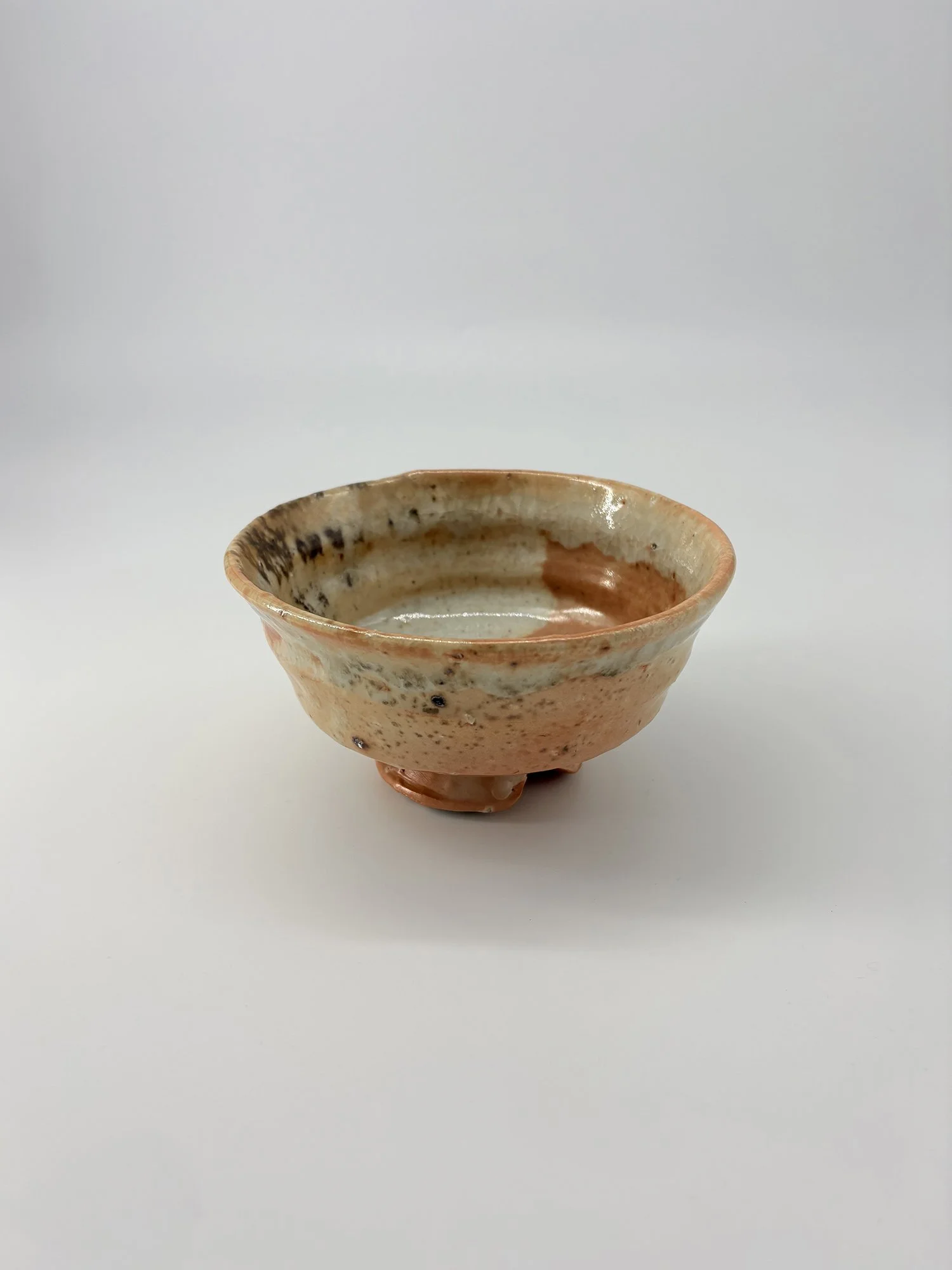
Cut foot bowl #2
Anagama fired porcelain
Shino and celadon glaze
W 14.5 x H 8.5cm approximately
Sold -
![]()
Cut foot bowl #3
Anagama fired porcelain
Shino and celadon glaze
W 14.5 x H 8.5cm approximately
£110 -
![]()
Cut foot bowl #4
Anagama fired porcelain
Shino and celadon glaze
W 14.5 x H 8.5cm approximately
Sold -
![]()
Cut foot bowl #5
Anagama fired porcelain
Shino and celadon glaze
W 14.5 x H 8.5cm approximately
£110 -
![]()
Cut foot bowl #6
Anagama fired porcelain
Shino and celadon glaze
W 14.5 x H 8.5cm approximately
£110 -
![]()
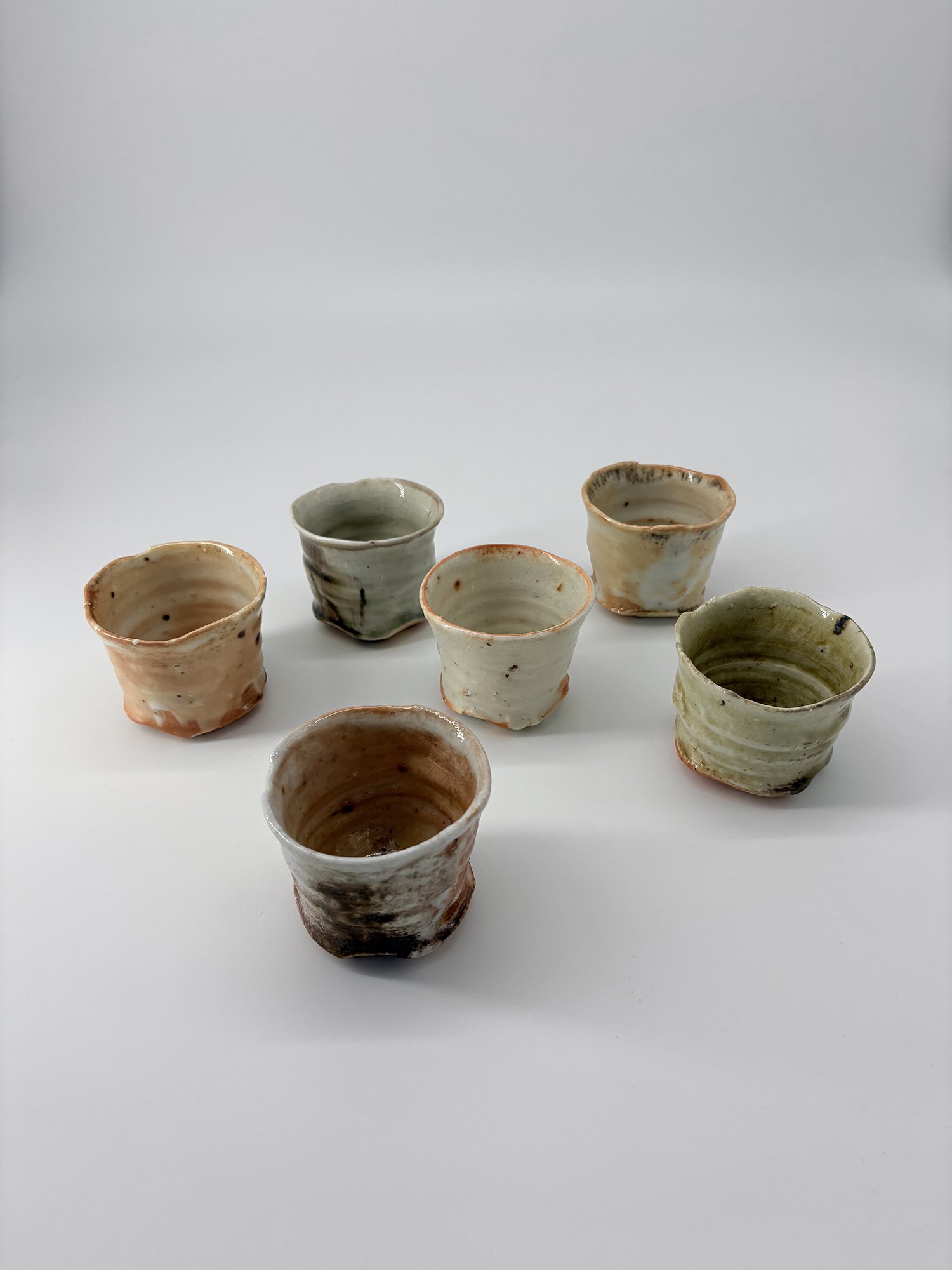
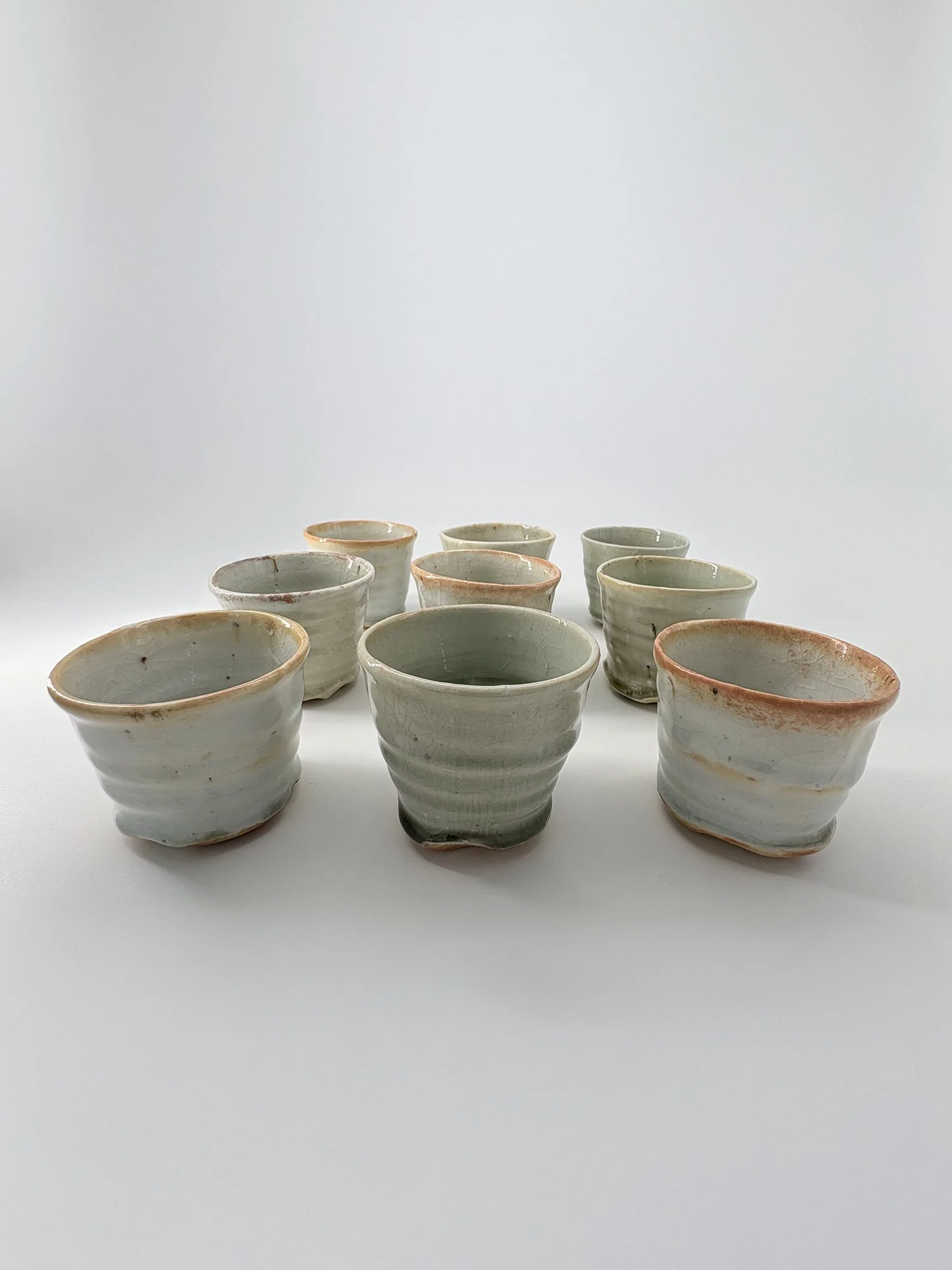
Petit cups
Anagama fired porcelain
Shino and Celedon glaze
W 8 x H 7cm approximately
£40 each -
![]()
-
![]()
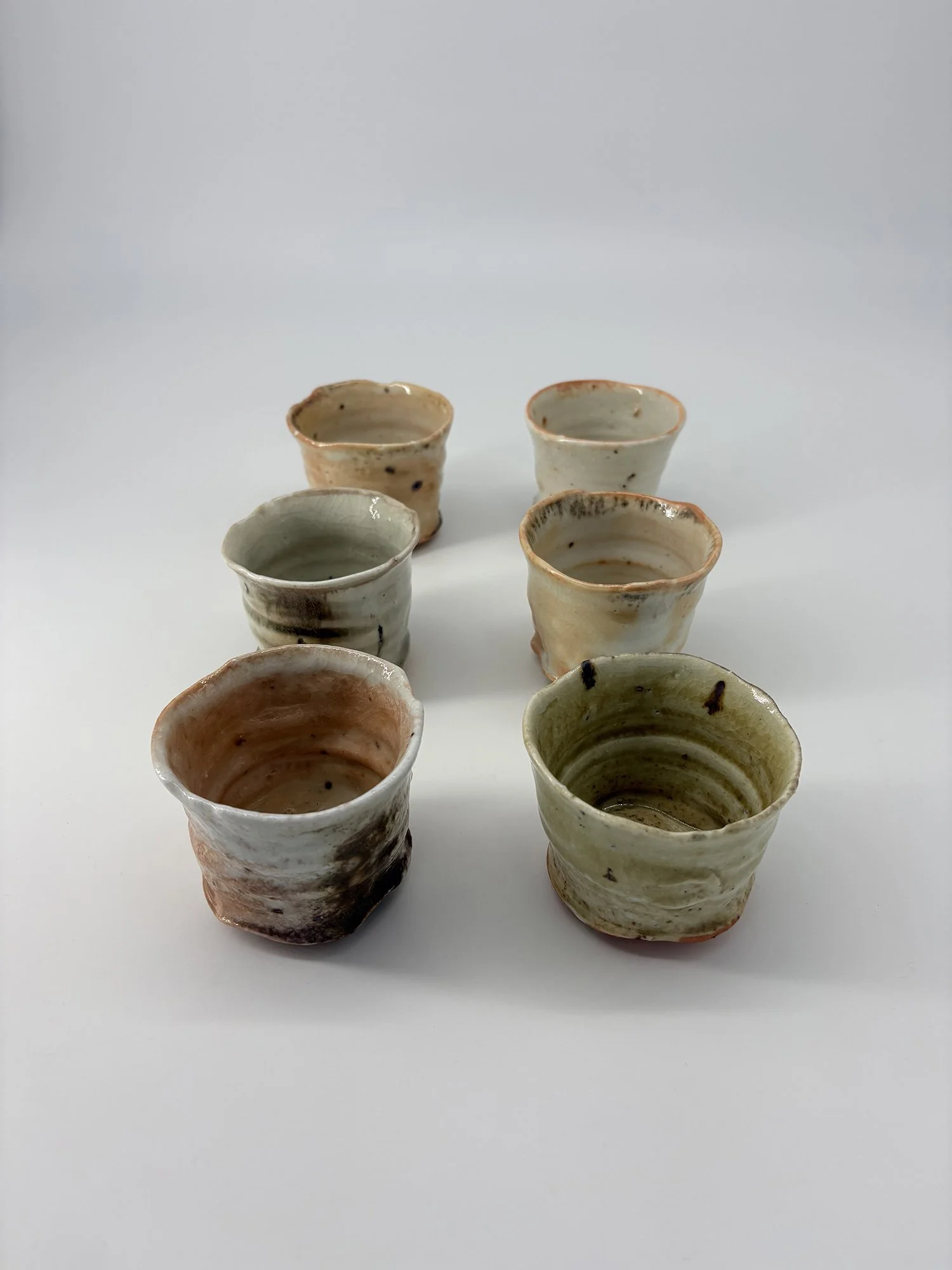
Petit cups
Anagama fired porcelain
Shino and Celedon glaze
W 8 x H 7cm approximately
£40 each -
![]()