Peter Mammes
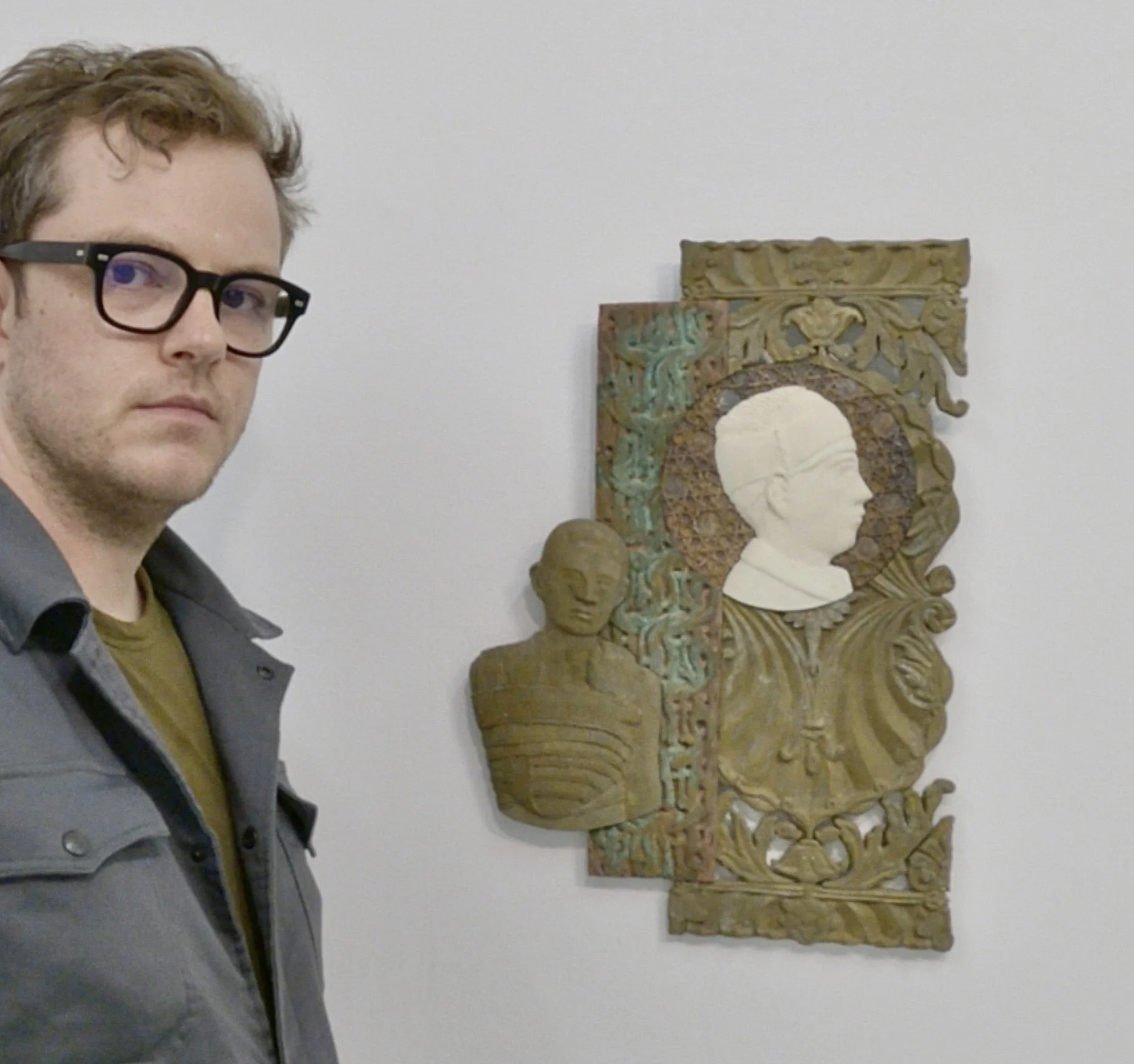
Peter Mammes is a South African-born artist based in London working across drawing, painting, print and sculpture. He is internationally exhibited, with a practice rooted in research-led visual systems that explore historical and cultural narratives through pattern, symbol and iconography. His work synthesises extensive archival research with motifs sourced on travels across Egypt, India, Russia and beyond, with particular references to ancient hieroglyphics, war imagery, colonial histories and pattern systems as expressive forms of human experience.
Mammes attended the National School of the Arts, Johannesburg, where he received his formal training. He held his first solo exhibition at age sixteen and has exhibited consistently internationally since. He was commissioned to design a commemorative coin for circulation by the South African Mint (2019), released in celebration of 25 years of constitutional democracy. He lives and works in London.
About the work:
Peter Mammas' process begins with laser engraving an image in negative onto walnut, meaning that the white areas of the composition are engraved rather than the dark areas. The engraving is cut deeply into the wood, creating recessed channels that are subsequently filled with either white resin or resin infused with brass or aluminium powder.
Each artwork originates as a hand-painted drawing created with a paintbrush before being converted into a vector file for the engraving process. This fusion of traditional craftsmanship and contemporary technology preserves the expressive qualities of the original mark-making while enabling a highly precise and durable finish.
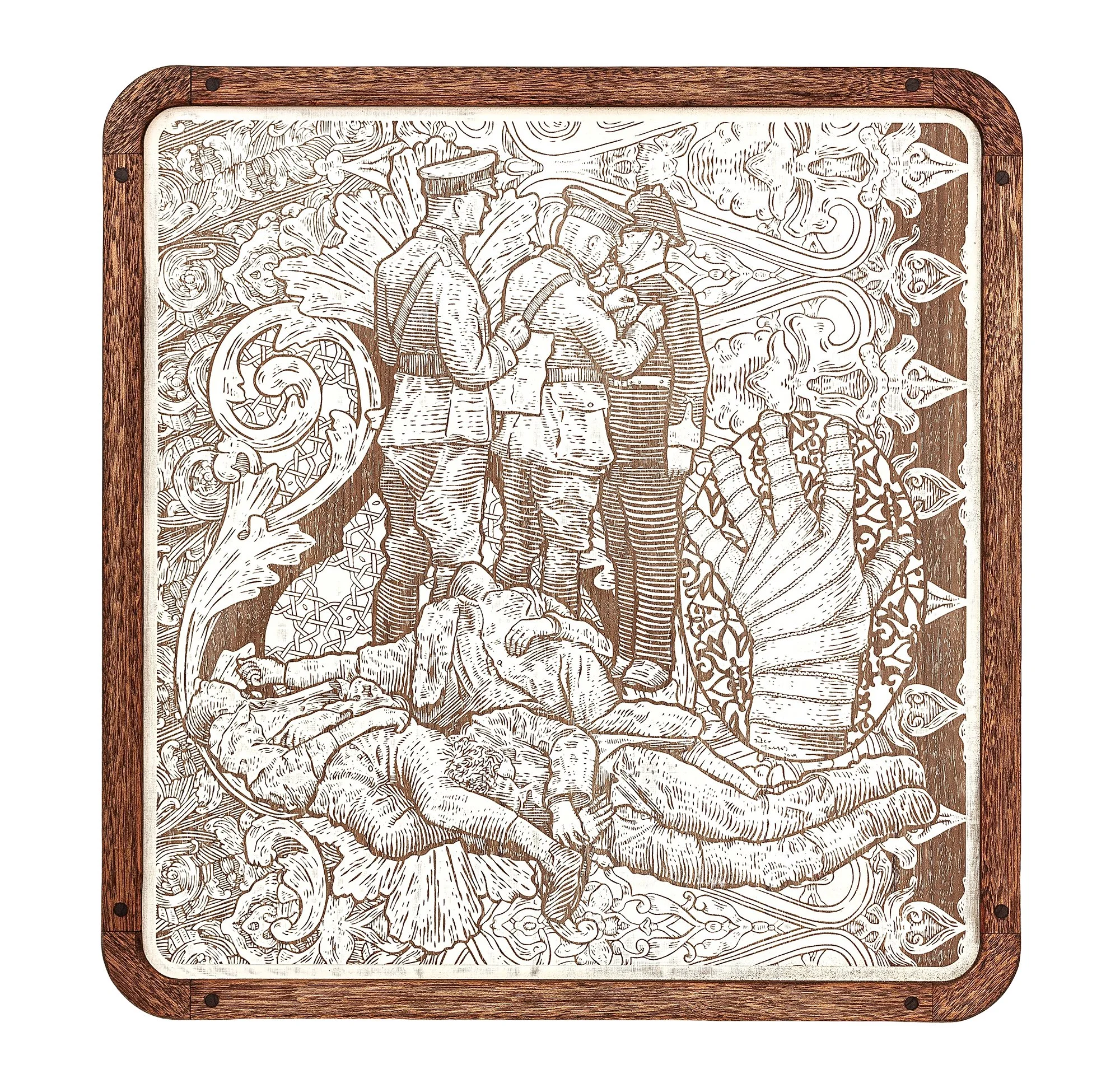
Sycophants of Power is an anti-war work that draws on imagery from the trenches of the First World War. It depicts the ceremonial presentation of a medal to a police officer standing beside the bombed corpses of civilians, exposing the stark contrast between public displays of honour and the devastating human cost of violence. The bandaged hand serves as a metaphor for healing, suggesting both physical recovery and the possibility of societal reconciliation after conflict.
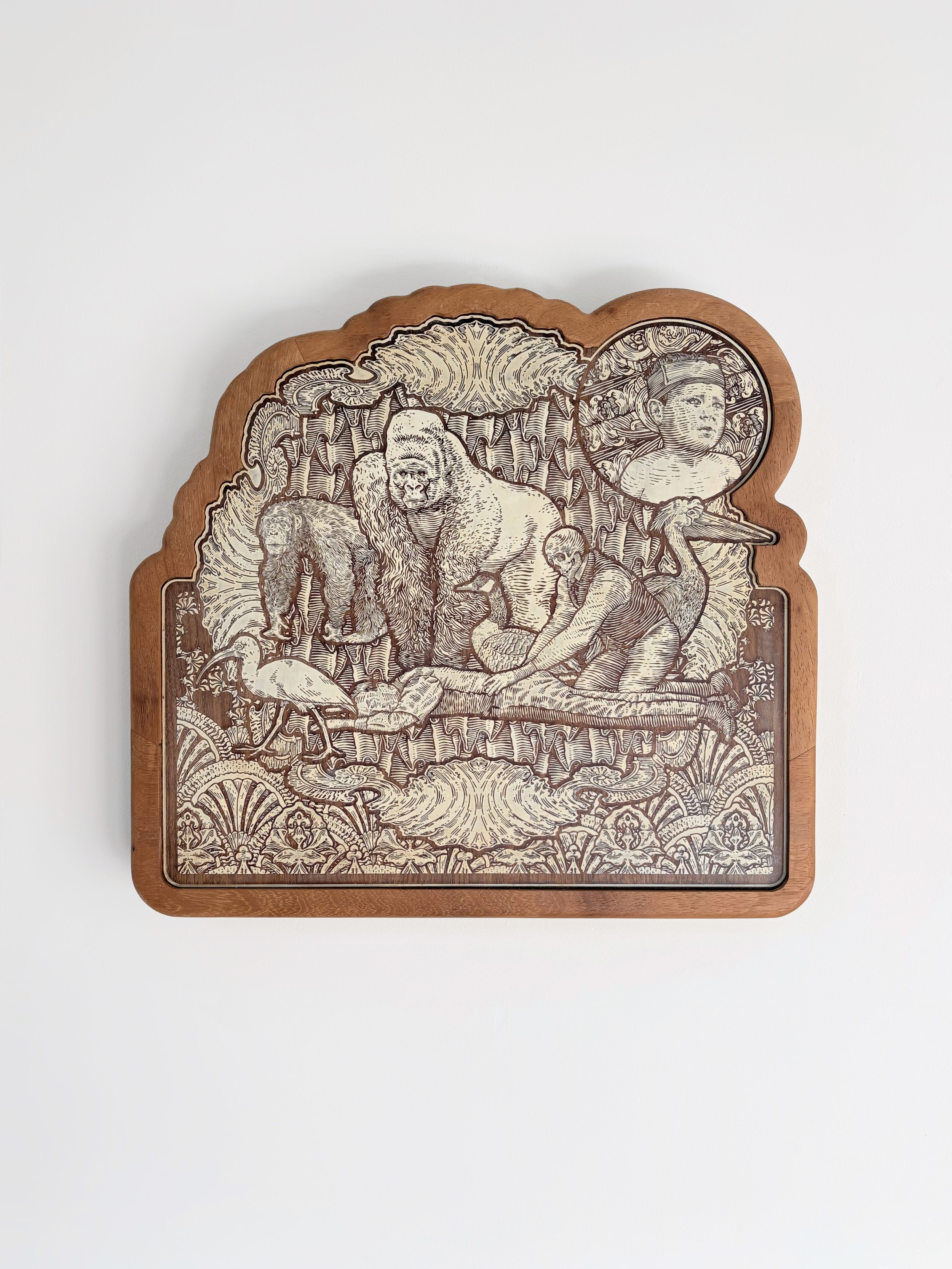
Wake Up Call explores the return of forgotten ideas, suggesting that solutions to today's environmental crises may lie in values and ways of thinking that have long been abandoned. Rising metaphorically from the grave, these discarded ideas invite us to reassess our relationship with the natural world. The work proposes that protecting our planet may require reviving wisdom from the past rather than relying solely on new innovations.
-
![]()
Wake Up Call
Engraved wood, resin
51.5 x 53cm
Sold -
![]()
Sycophants of Power
Engraved wood, resin
53 x 55cm
£500 -
![]()
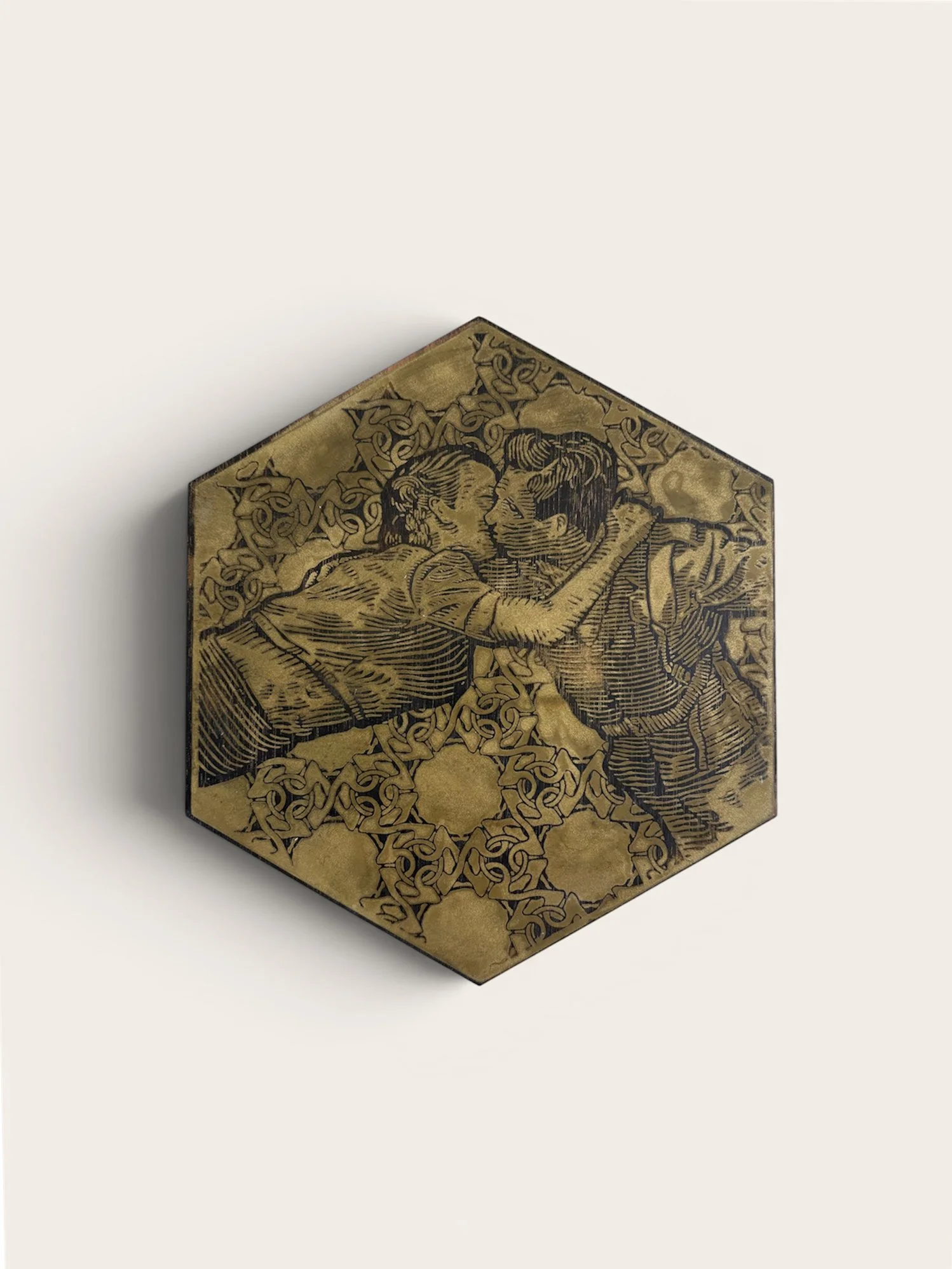
The Kiss
Engraved wood, brass infused resin
18.5 x 21cm
£110 -
![]()
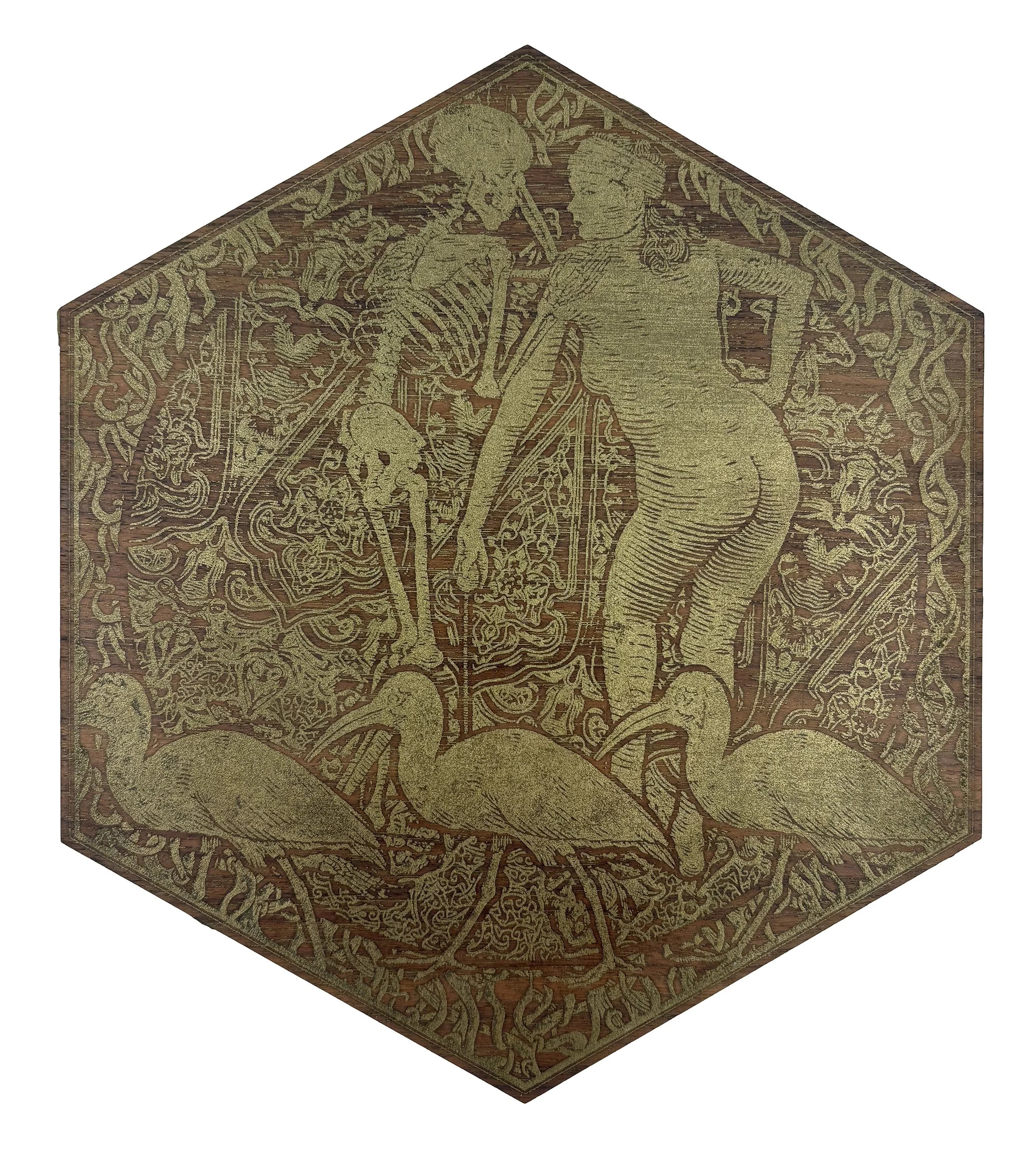
Memento Mori
Engraved wood, brass infused resin
18.5 x 21cm
Sold